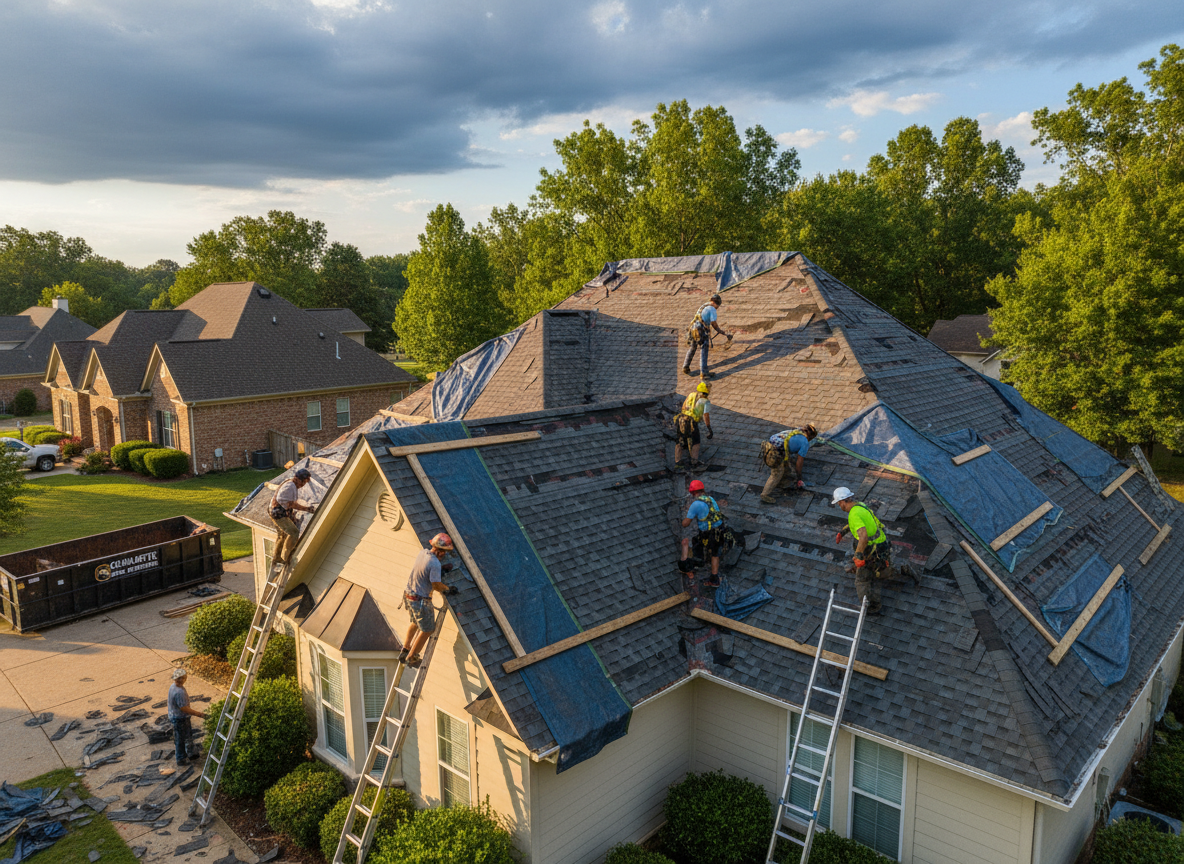
Severe weather is the leading cause of sudden roof failure in Charlotte, and storm damage often runs deeper than what is visible from the ground. Roof storm damage charlotte work addresses hail-impacted shingles, wind-lifted tabs, torn flashing, and debris impacts after severe thunderstorms, and it includes assessing whether the damage qualifies for an insurance claim and whether the roof can be repaired or should be replaced. At roof replacement charlotte, we help Mecklenburg County homeowners document storm damage, make the needed repairs, and navigate the decision between repair and replacement after a storm. If you are searching for roof storm damage charlotte NC homeowners trust after a hail or wind event, this page explains what storm damage looks like, why fast response matters, and how local weather and code shape the recovery.
Opening block
Charlotte homeowners dealing with roof storm damage charlotte issues are usually responding to a specific weather event: hail that dented shingles, wind that lifted tabs and left them curling, or a tree limb that struck the roof during a severe thunderstorm. NOAA records document hundreds of thunderstorm wind events in Mecklenburg County over recent decades, with significant gusts reaching 75 mph or more, and hail is a regular part of the Piedmont storm season. Storm damage is often not obvious from the curb; hail bruises the asphalt mat and breaks the thermal seal without knocking shingles off, and wind lifts edges just enough to let water in on the next rain. Roof storm damage charlotte means documenting that damage, sealing the roof against the next storm, and determining whether repair or replacement is the responsible path. Waiting leaves the roof exposed to the next weather event and turns a manageable claim into deck rot and interior water damage.
Why us
Pages ranking for roof storm damage charlotte often discuss storm repair in national terms; tarping, shingle replacement; without addressing what drives storm damage here: the frequency of hail and thunderstorm wind in Mecklenburg County, the local wind-code provisions that govern how a repaired roof must be fastened, and the permit process through Mecklenburg County Code Enforcement. Most architectural shingle roofs in Charlotte were installed 15 to 25 years ago and last roughly 18 to 22 years in the local climate, so a storm-damaged roof is often already near the end of its service life. We approach roof storm damage charlotte work with local specificity: we reference the documented hail and wind history that supports an insurance claim, explain the code requirements for repairs in this wind zone, and give an honest repair-versus-replace assessment based on roof age and damage extent rather than pushing the most expensive option. That local knowledge; weather patterns, code, housing age; is what separates a Charlotte storm-damage contractor from a generic storm-chaser.
Why now
Delaying roof storm damage charlotte repairs after a hail or wind event is one of the costliest mistakes a homeowner can make. A roof with lifted seals, bruised shingles, or torn flashing is exposed to the very next rain, and Mecklenburg County's storm season means that next event can arrive within weeks. Water travels along rafters and insulation long before a ceiling stain appears, damaging decking, insulation, and electrical components, and each rain event widens the problem. There is also a time element with insurance: claims generally must be filed within a reasonable window after the event, and documentation is strongest when the roof is inspected promptly. Most asphalt roofs in Charlotte last 18 to 22 years; a storm-damaged roof that is already aging is unlikely to survive another season without replacement. Acting now preserves the deck, supports the claim, and keeps the repair scoped and affordable before storm-season demand drives pricing up.
Proof
Verifiable local facts anchor a roof storm damage charlotte conversation. Mecklenburg County Code Enforcement requires building permits for roofing work involving structural repairs or decking replacement, and permit fees typically run about $100 to $300 with a turnaround of roughly one to three days; minor shingle repairs may be exempt, but once the deck is exposed, a permit is generally required. North Carolina residential code provisions place Charlotte in a wind zone where design wind speeds govern fastener schedules, underlayment, and anchorage; so a storm repair installed to code uses the correct nail pattern and materials for this zone. NOAA storm-event data documents frequent hail and thunderstorm wind activity in Mecklenburg County, which supports impact-rated material choices and strengthens the factual basis for an insurance claim. These are public facts from the county permit page, the state building code, and the NOAA storm events database.
Unique scenario
A situation most roof storm damage charlotte pages never address is the storm-damaged roof that is also near the end of its service life, where the insurance adjuster's scope may cover storm-related repairs but not age-related replacement, leaving the homeowner to pay the difference. In Charlotte, many roofs damaged by hail or wind were installed 15 to 25 years ago and are already at 18 to 22 years of service. The unique scenario is managing that gap: a contractor who documents storm damage with photos and measurements, references the local wind and hail history that supports the claim, separates storm-related damage from age-related wear, and builds a scope that meets current Mecklenburg County code; including fastener patterns, underlayment, and any decking required during tear-off; while being straight with the homeowner about what insurance is likely to cover versus what age-related replacement costs they will carry. National pages discuss storm damage generically; they do not explain how a Charlotte roof's age interacts with a claim, what code upgrades the county may require, or how to coordinate the inspection timeline. That claims-aware, honest assessment is where a local contractor earns the job.
Hail damage and impact-rated shingles
Hail damage bruises the asphalt mat, knocks off granules, and breaks the thermal seal that bonds shingle courses, often without removing shingles entirely. On Charlotte roofs, hail damage is hard to see from the ground but compromises the water-shedding surface and shortens shingle life. What goes wrong: replacing only obviously dented shingles while leaving bruised, seal-failed shingles that leak on the next rain. What the homeowner should do or ask: request an impact assessment across all slopes, confirm replacement shingles are impact-rated and architectural, and verify the fastener pattern meets Mecklenburg County wind-zone requirements.
Wind damage and seal failure
Wind damage lifts shingle edges, breaks seals, and can tear shingles off entirely during severe thunderstorms, leaving the underlayment and deck exposed. In Mecklenburg County, thunderstorm wind gusts can reach 75 mph or more, and a roof with marginal seals is vulnerable even in moderate events. What goes wrong: re-nailing lifted shingles without resealing them, or repairing visible shingles while leaving adjacent shingles with the same hidden seal failure. What the homeowner should do or ask: require resealing of lifted shingles with approved roofing cement, inspect all slopes for seal failure, and confirm the repair meets local wind-code fastening standards.
Flashing and penetration storm damage
Storm damage to flashing and penetrations; chimneys, skylights, plumbing vents, and valleys; is a leading cause of post-storm leaks, because these transition points fail before the shingle field does. Hail can dent metal, wind can lift flashing, and sealant can crack in the heat cycle, all creating entry points for water. What goes wrong: resealing old, corroded flashing instead of replacing it, or flashing a penetration in a way that traps water. What the homeowner should do or ask: require new step and counterflashing at all penetrations, proper valley lining, and a water test after the repair to confirm the leak is sealed.
Mecklenburg County storm repair permits and code
Mecklenburg County Code Enforcement requires building permits for storm repair work involving structural repairs or decking replacement; permit fees typically run about $100 to $300 with issuance in roughly one to three days. North Carolina residential code provisions set the design wind speed for this zone and dictate fastener patterns, underlayment, and anchorage, which apply to storm repairs as well as replacement. What the homeowner should do or ask: confirm whether the planned storm repair requires a permit, who pulls it, and whether a county inspection will be scheduled; verify the finished repair passes final approval.
Technician insight
A storm-damaged roof that is already near the end of its 18- to 22-year service life is unlikely to survive another season, so separating storm damage from age-related wear—and being straight about what insurance covers—is where a local contractor earns the job.