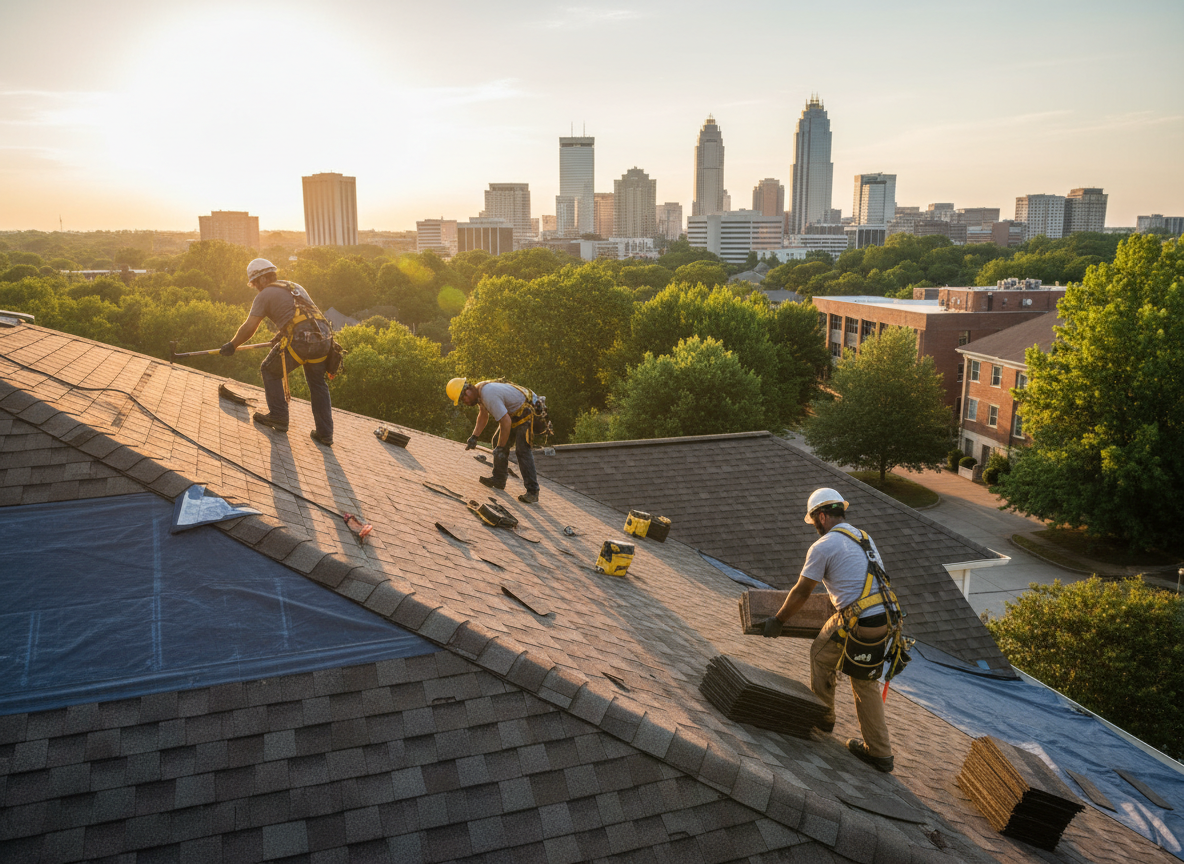
A leaking or storm-damaged roof does not wait, and neither should the homeowner. Roof repair charlotte service addresses the specific failures that show up on Mecklenburg County homes: wind-lifted shingles after a thunderstorm, hail-impacted asphalt, cracked flashing around chimneys and vents, and leaks that trace from the attic to the ceiling. At roof replacement charlotte, we help Charlotte homeowners determine whether a targeted repair can restore the roof or whether the damage has reached the point where replacement is the honest answer. If you are searching for roof repair charlotte NC homeowners can count on after a storm, this page explains what repair covers, when it makes sense, and how local weather and code shape the work.
Opening block
Charlotte homeowners calling for roof repair charlotte service are usually responding to a specific event: a shingle found in the yard after a severe thunderstorm, a ceiling stain after heavy rain, or daylight visible through the attic after a hail event. The Piedmont climate brings regular thunderstorm wind and hail, and NOAA records show hundreds of wind events in Mecklenburg County over recent decades, with significant gusts reaching 75 mph or more. A primary concern is not just the visible leak but what is hidden beneath; lifted shingles compromise the seal, wind drives rain under the edges, and hail bruises the asphalt mat in ways that are not obvious from the ground. Roof repair charlotte work means diagnosing that entry point, sealing it, and assessing whether the surrounding system is still sound or whether the roof has aged past the point where repair is a responsible fix. Waiting turns a localized repair into deck rot, mold, and a full replacement that could have been avoided.
Why us
Most pages ranking for roof repair charlotte speak in national generalities about patching leaks and replacing a few shingles, without addressing what actually causes failure here: hail, thunderstorm wind, humidity-driven granule loss, and the age of the local housing stock. Most architectural shingle roofs in Charlotte were installed 15 to 25 years ago and last roughly 18 to 22 years in the Piedmont climate, shorter than the 25 to 30 years often quoted nationally. A repair that ignores the roof's age, the Mecklenburg County permit requirements, and the local wind-code fastener patterns is a temporary fix on a tired system. We approach roof repair charlotte differently: we name the local storm drivers, explain when a repair is appropriate versus when replacement is the honest recommendation, and reference the Mecklenburg County Code Enforcement permit process and North Carolina residential code provisions that govern how roofing work is performed in this wind zone. That specificity; local weather, local code, local housing age; is what separates a Charlotte repair from a generic one.
Why now
Delaying roof repair charlotte work after a storm or leak is one of the most expensive decisions a homeowner can make. Water that enters through a lifted shingle, cracked flashing, or hail-damaged seal travels along rafters and insulation long before it appears as a ceiling stain, damaging structural wood, electrical components, and indoor air quality. Mecklenburg County's thunderstorm and hail season means a compromised roof is exposed to the next storm within weeks, not months, and each rain event widens the entry point. The cost of delay compounds quickly: a simple shingle re-seal or flashing repair becomes deck replacement, mold remediation, and interior drywall work. Most asphalt roofs in the Charlotte area last 18 to 22 years; if your roof is in that window and has already taken storm hits, every month of delay increases the chance that repair is no longer enough and replacement becomes unavoidable. Acting now preserves the deck and keeps the repair scoped and affordable.
Proof
Verifiable local facts shape a responsible roof repair charlotte conversation. Mecklenburg County Code Enforcement requires building permits for roofing work that involves structural repairs or decking replacement, and permit fees typically run about $100 to $300 with a turnaround of roughly one to three days; like-for-like shingle repairs may be exempt, but once the deck is exposed, a permit is generally required. North Carolina residential code provisions place Charlotte in a wind zone where design wind speeds govern fastener schedules, underlayment, and anchorage; so a repair installed to code uses the correct nail pattern and materials for this zone, not a generic national standard. NOAA storm-event data documents frequent hail and thunderstorm wind in Mecklenburg County, which is why impact-rated materials and proper flashing details matter here. These are public facts from the county permit page, the state building code, and the NOAA storm events database, and any contractor performing roof repair charlotte work should be able to reference them.
Unique scenario
A situation most roof repair charlotte pages never address is the roof that has been patched multiple times after repeated storms, where each repair addresses the latest leak but never the underlying pattern. In Charlotte, hail and wind events recur, and a roof that has been patched three or four times over several years often has widespread seal failure, hidden deck moisture, and shingles that no longer lay flat; even if the most recent leak seems small. The unique scenario is recognizing that continued patching is throwing good money after bad: each call-out fee, each box of shingles, and each labor visit adds up toward the cost of a full replacement, while the roof continues to deteriorate beneath the patches. National pages discuss one-off leak repair; they do not help a Charlotte homeowner weigh the cumulative cost of repeated repairs against replacement, factor in the local storm frequency that drives repeat damage, or explain when the roof has passed the point where repair is financially responsible. That honest repair-versus-replace assessment is the value a local contractor provides.
Asphalt shingle repair and seal failure
Asphalt shingle repair addresses the most common failure on Charlotte homes: shingles that lift, curl, crack, or lose their seal after wind and hail. The shingle relies on a thermal sealant strip that bonds courses together; when wind lifts the shingle or hail bruises the mat, that seal breaks and water can enter. What goes wrong: re-nailing a lifted shingle without resealing it, or spot-replacing shingles while leaving adjacent aged shingles that will fail next season. What the homeowner should do or ask: confirm the contractor reseals shingles with approved roofing cement, matches the existing shingle type and color, and inspects the surrounding slope for the same failure pattern rather than fixing only the obvious spot.
Flashing and penetration repair
Flashing repair targets the metal at roof transitions; chimneys, skylights, plumbing vents, and valleys; where the majority of leaks originate. On older Charlotte homes, flashing corrodes, sealant dries out in the heat cycle, and step flashing separates from the wall, all of which let water in long before the shingles themselves fail. What goes wrong: applying sealant over old flashing without replacing corroded metal, or flashing a penetration in a way that traps water against the deck. What the homeowner should do or ask: require new step and counterflashing at all penetrations, proper valley lining, and a water test after the repair to confirm the leak is sealed.
Roof deck and attic assessment
Deck and attic assessment looks beneath the shingles for the damage a surface repair cannot see: rotted plywood, water-stained rafters, compressed insulation, and mold. In Mecklenburg County, a leak that reaches the attic has often been traveling for weeks before it stains the ceiling, and the deck may be compromised even when the shingles look intact from the ground. What goes wrong: repairing shingles without checking the deck, then reinstalling over rot that continues to spread. What the homeowner should do or ask: request an attic inspection during the repair estimate, ask for photos of any deck damage, and get written pricing for deck replacement per sheet before work begins.
Mecklenburg County repair permits and code
Mecklenburg County Code Enforcement governs when a roof repair requires a permit. Minor shingle replacement of like fire-resistance material may not require one, but repairs involving structural work, decking, or a change in roof covering generally do. North Carolina residential code provisions set the design wind speed for the Charlotte zone and dictate fastener patterns and underlayment, which apply to repair work as well as replacement. What the homeowner should do or ask: ask whether the planned repair requires a permit, who pulls it, and whether a county inspection will be scheduled; confirm the repair will meet the local wind-code fastening standard.
Technician insight
A roof repaired after repeated storms often has hidden seal failure and deck moisture beneath the patches; continued patching can cost more than replacement, so an honest repair-versus-replace assessment based on roof age and condition is the real value.